Menu
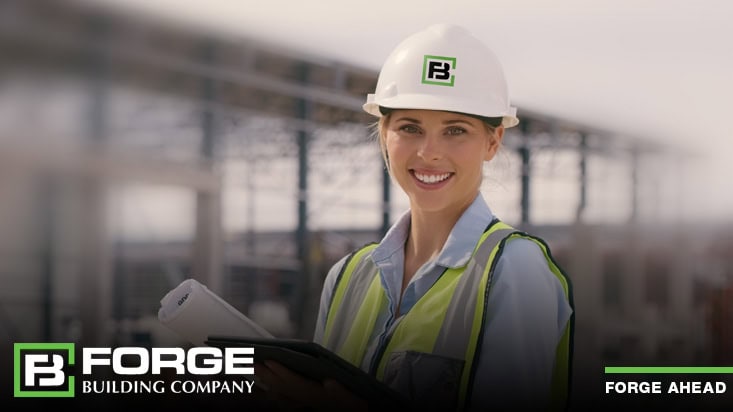
Earlier this month, we celebrated Women in Construction Week, a time dedicated to recognizing the women who contribute to this industry and the impact they make every day. While the week has passed, we’re continuing the celebration throughout March because the truth is: the work women do in construction deserves recognition far beyond a single week.
At Forge Building Company, we are proud of the women on our team who make a meaningful difference in our success. Their contributions show up across the entire organization. While construction is often associated with what happens in the field, successful projects rely on far more than on-site execution alone. Every project depends on coordination, communication, planning, accountability, and teamwork across multiple departments.
That is what makes this recognition especially important. At Forge, women contribute across the business in roles that support clients, strengthen internal processes, improve project coordination, and help keep work moving forward. Their contributions are not limited to one function or one title. They are part of the collaborative effort that helps Forge deliver for clients and partners every day.
Construction is, at its core, a team sport. No department works in isolation. Sales help build relationships and create opportunities. Drafting helps translate concepts into clear, workable plans. Project management helps guide execution and maintain momentum. Accounting helps provide the structure and financial clarity that support the business as a whole. Each role matters on its own, but the real strength comes from how those roles work together.
At Forge, that collaboration is one of the things that makes the company strong. It is also one of the clearest examples of how women are helping shape the business from every angle. This month, we are highlighting a few of the women whose work represents that impact. While these are only a few examples, each of them reflects a much larger truth: women across Forge are integral to our success.
 In sales, strong relationships and clear communication often set the tone for everything that follows. That is especially true in construction, where early conversations can influence expectations, timelines, coordination, and the overall client experience. Danielle O’Hara-Murphy plays an important role in that process at Forge.
As an Account Executive, Danielle helps create connections, identify opportunities, and support the early stages of client engagement. Her role is not only about business development, but it is also about helping create alignment between client needs and internal execution. In many ways, sales serve as one of the first bridges between the market and the rest of the organization. That requires strong communication, responsiveness, and the ability to collaborate across departments from the very beginning.
At Forge, sales does not operate in a silo. It relies on ongoing collaboration with internal teams to make sure information is communicated clearly and that opportunities are supported with the right level of coordination. Danielle’s work reflects that reality. Her role contributes to the momentum that helps projects move from an initial conversation into something buildable, actionable, and supported by the broader team.
“My role at Forge is being part of the process that turns ideas into real buildings. In preconstruction, I have the opportunity to collaborate with developers, general contractors, engineers, and our internal team to help shape projects from the earliest conversations through execution. As a woman in construction, I’m proud to bring a collaborative, relationship-driven perspective that helps align teams and solve challenges early, so together we can bring great projects to life.” – Danielle O’Hara Murphy
Danielle’s perspective is an important reminder that women in construction are helping shape outcomes long before a project reaches the field. Through communication, relationship-building, and cross-functional coordination, roles like hers help strengthen both the client experience and the internal collaboration that supports successful project delivery.
 Behind every successful project is a foundation of accurate information, thoughtful coordination, and clear documentation. That is where drafting plays a critical role, and why this function is such an essential part of the construction process. At Forge, Mikaela represents the kind of precision and support that helps projects move forward with confidence, and she brings added impact through the leadership she provides to the drafting team.
As the leader of Forge’s team of drafters, Mikaela helps ensure consistency, accuracy, and alignment across the department. In a role that requires both technical expertise and strong communication, she supports not only the quality of the work being produced, but also the people producing it. That leadership matters. Drafting often sits at the intersection of vision and execution, and Mikaela helps guide the team in translating project needs into clear, coordinated plans that downstream teams can trust.
Drafting is one of those roles that directly connects ideas to execution. It helps ensure that concepts are translated into practical, coordinated plans that the rest of the team can work from. Accuracy matters. Details matter. Communication matters. When drafting is done well, it helps reduce confusion, improve clarity, and support stronger coordination between teams.
Drafting also plays a critical role after a project is won. Once a project moves from sales into execution, the drafting team helps the Project Management group by supporting the detailing process, turning project requirements into the clear, build-ready information needed to keep schedules moving and teams aligned. This collaboration helps ensure that Project Management has the documentation, details, and clarity required to coordinate effectively with internal teams and external partners.
Mikaela’s role reflects how important technical and detail-oriented work is to the overall success of the business. Her contributions support internal alignment and help create the kind of structure that allows projects to advance more smoothly. In addition to her drafting expertise, her leadership strengthens how the team operates day to day—helping prioritize work, maintain standards, and keep communication flowing between departments.
At Forge, leaders like Mikaela are an important part of what keeps projects organized and teams connected. Her work reinforces the reality that construction is not only about building structures, but also about building from a strong, coordinated plan.
“I love that Forge has let me bring renderings and visualization into the ‘norm’, it helps clients and our team really understand a project before it even starts. And I’m proud to be a woman in an unexpected field, people don’t look at me and think ‘construction’ or ‘engineering,’ so it’s always fun to prove you can’t judge a book by its cover.” – Mikaela Taylor
Mikaela’s work is a great example of the many ways women are contributing to technical and leadership roles across the industry. It also highlights the importance of behind-the-scenes leadership that makes strong execution possible.
 If sales help create momentum and drafting helps provide clarity, project management helps keep everything moving. In construction, project management is one of the most important functions for maintaining communication, tracking progress, and helping teams stay aligned from start to finish. At Forge, Aspen plays a key role in supporting that effort.
Project management requires a strong balance of organization, problem-solving, communication, and adaptability. It is a role that connects multiple moving parts and helps ensure that priorities stay aligned as work progresses. Whether coordinating with internal teams, managing timelines, or addressing day-to-day project needs, project management helps turn plans into execution. Aspen’s role reflects the importance of steady coordination in an environment where timing and accountability matter. Construction projects involve many handoffs, decisions, and dependencies, and keeping those moving effectively requires someone who can maintain visibility across the process. That kind of leadership is essential not just for project flow, but for the confidence and consistency the team brings to clients and partners.
At Forge, project management is a direct example of how collaboration functions in real time. It is where communication, execution, and teamwork come together. Aspen’s contributions help reinforce the kind of structure and responsiveness that successful projects depend on.
“It’s difficult to choose just one thing, but I love that my role at Forge brings a different challenge every day—managing multiple projects and clients means no two days are the same. Communication is essential because details can change day to day, whether drawings are updated, additional materials are needed, or modifications happen after construction starts, and consistent communication keeps everyone on the same page throughout the project.” – Aspen Mains
Aspen’s perspective is an important part of this conversation because it shows how women in construction are often at the center of coordination, helping connect teams, solve problems, and keep momentum in place throughout the project lifecycle.
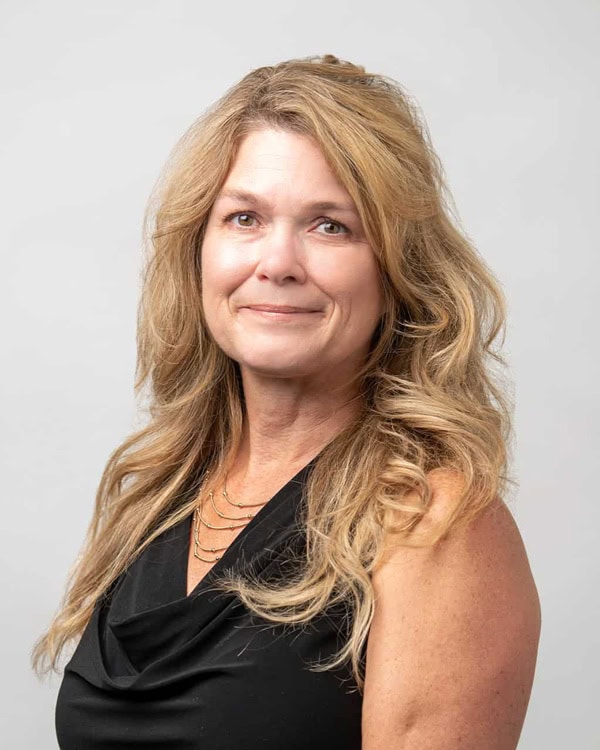 In construction, strong financial processes and reliable internal support are just as important as the work that happens in front of clients or on a project schedule. Accounting plays a critical role in helping organizations operate effectively, maintain accuracy, and support the systems that keep the business moving. At Forge, Tishka represents that essential contribution.
Accounting is often one of the clearest examples of behind-the-scenes impact. It helps create consistency, structure, and visibility across the business. In a fast-moving environment, those qualities matter. Timely financial oversight, accuracy in process, and dependable internal support all contribute to a stronger organization and better experience for both internal teams and external partners.
Tishka’s role highlights the importance of the operational foundation that supports everything else. Construction companies rely on more than project execution alone; they rely on strong internal systems that make execution sustainable. Accounting helps provide stability, and it is a key part of how departments stay aligned and informed.
At Forge, this role also reflects the broader truth that successful construction companies are built by teams with different strengths working together. Accounting may not always be the most visible department from the outside, but its influence is felt throughout the business. It helps support confidence, organization, and long-term performance.
“What I enjoy most about my role at Forge is being part of the behind-the-scenes magic that keeps everything running smoothly. Accounting might not be the “flashiest” part of construction, but we’re the ones making sure the numbers make sense, bills get paid, legal legalities are in place and projects stay on track. Most people don’t see the spreadsheets, problem-solving, and coordination happening in the background—but without it, the jobsite would feel it quickly! I’m proud to be a woman in construction because we’re proving that every role, from the field to the financials, plays a huge part in building something great. We are the crucial part for leadership to make smart decisions.” – Tishka Myre
Tishka’s contributions are a strong reminder that women in construction are adding value in every part of the organization, including the roles that create the consistency and structure a business depends on.
What connects these roles is not just their individual importance, but how they work together to strengthen the entire organization. Danielle, Mikaela, Aspen, and Tishka each represent a different function within Forge, yet they all contribute to the same shared goal: helping the company operate effectively, serve clients well, and deliver successful projects.
This is an important reminder not only during Women in Construction Week, but throughout the month of March and beyond. Women contribute across every part of the business—not confined to a single lane. They help drive communication, strengthen coordination, support internal systems, and improve performance across departments. Their work touches client relationships, technical planning, daily project execution, and the internal structure that keeps the company running smoothly.
At Forge, that kind of cross-functional impact is worth celebrating. It reflects the reality that strong companies are built by strong teams—teams made up of people with different skills, perspectives, and responsibilities who are all working toward a shared outcome.
This month, we are proud to highlight a few of the women at Forge who represent that strength. While they are just a few of the many women contributing to the company’s success, each of them reflects something essential about who Forge is: a collaborative team made stronger by the people behind it.